
Housing for the people, by the people
We advocate for practical, attainable housing choices that give people a safe place to call home.
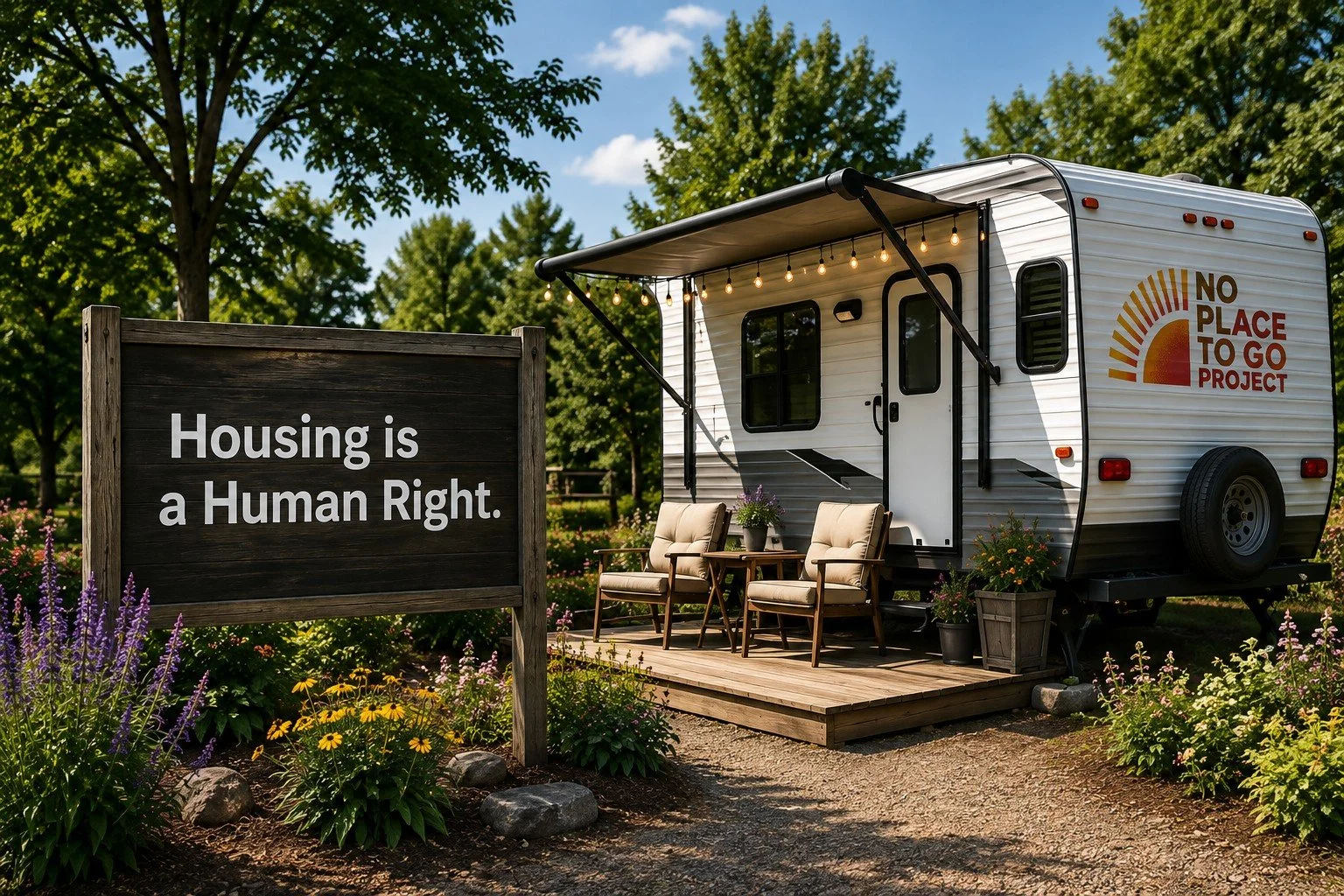
Safe Parking: A Growing Need in Nevada County
As overnight parking restrictions expand, where can people living in their vehicles safely go?
Nevada County supervisors recently advanced restrictions on overnight parking along several county roads, citing concerns about sanitation, traffic safety, and emergency access. During the discussion, supervisors also acknowledged the need to explore safe parking alternatives, including possible partnerships with local churches.
For people experiencing homelessness who rely on their vehicles for shelter, the loss of legal parking locations can create additional hardship without resolving the underlying housing crisis.
No Place to Go Project believes safe parking programs deserve serious consideration as a practical, temporary response while our community works toward permanent housing solutions.
We are researching successful programs in other communities to help identify approaches that could work in rural Nevada County.
See our full article here: When Overnight Parking Disappears, Where Can People Go?
Living in RVs and trailers, not to mention yurts, platform tents and shipping containers, is not a radical idea. It’s an excellent, common-sense solution. Even though it’s illegal, hundreds of people in Nevada County do it because it’s their only affordable housing choice. RVs and other alternative housing are the right-here, right-now emergency response to our housing crisis.
Housing is a human right. If our government won’t do the right thing, it’s up to us, we the people. Join us!
Our mission is to use news & social media and the creative arts to champion social justice for housing-insecure, disabled, elderly, and low-income individuals in our community.
When free enterprise and government can’t, don’t or won’t provide enough housing for all the people in our communities, the people have the right to find their own alternative housing.
And if they are living responsibly, they must not be punished, penalized, or forced to relocate when there is no place to go.
Likewise, people who rent alternative housing to people must not be punished or penalized if they are providing or hosting dwellings that meet emergency, code-equivalent, health & safety standards.
Because there is not enough housing for everyone, and because not everyone is housing-ready, safe parking lots and camps must be established.
Everybody has a right to be somewhere safe without fear of being forced to move.